



Obituaries
February 16, 2026
Frederick Wiseman (1930 – 2026)
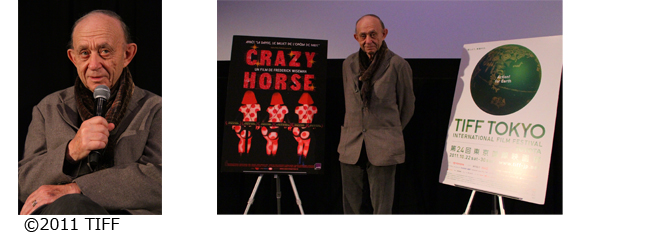
Photo: Frederick Wiseman at the Q&A session for Crazy Horse, screened in the World Cinema section at the 24th TIFF (2011).
Film director
Born in Boston in 1930, Frederick Wiseman graduated from Yale Law School. After practicing law while teaching, he entered the film industry in 1963 as the producer of The Cool World directed by Shirley Clarke, about life in a Harlem gang. He made his directorial debut in 1967 with the landmark documentary Titicut Follies.
Nearly six decades, he established himself as a master of the documentary, receiving the Golden Lion for Lifetime Achievement at Venice Film Festival in 2014 and an Honorary Oscar at the 2016 Academy Award. In his later years, he continued to explore new creative avenues, including a voice performance as a radio host in the 2024 baseball film Eephus.
Wiseman shared a special connection with the Tokyo International Film Festival. He attended the 24th TIFF in 2011 for a Q&A session for Crazy Horse, which headlined a major retrospective of his work across Japan. TIFF continued to celebrate his work by screening In Jackson Heights at the 28th TIFF in 2015, and his final masterpiece Menus-Plaisirs – Les Troisgros at the 36th TIFF in 2023.
January 31, 2026
Hasegawa Kazuhiko (1946 – 2026)
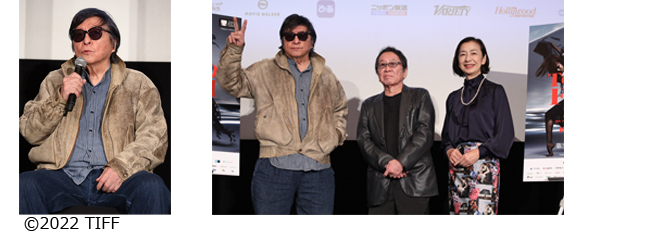
Photo: Hasegawa Kazuhiko at the talk session for DOOR with its director Takahashi Banmei and leading actress Takahashi Keiko, in the Japanese Classics section at the 35th TIFF (2022)
Film director
Born in Hiroshima in 1946. After serving as an assistant director on Fujita Toshihachi’s Wet Sand in August (1971) and Nikkatsu Roman Porno films, Hasegawa gained recognition for his screenplays, including Retreat Through the Wet Wasteland (1973), Bitterness of Youth (1974) and the 1975 TV series Man like a Devil.
He made his directorial debut in 1976 with The Youth Killer, which won first place in the 50th Kinema Junpo Best Best Ten Awards. His 1979 masterpiece, The Man Who Stole the Sun, was ranked in Kinema Junpo’s “Top 100 Japanese Films of the 20th Century” and was selected as number one in “1970’s Japanese Film Best Ten”.
In 1982, he co-founded Directors’ Company with eight other emerging directors of the era. The company produced films such as Somai Shinji’s Typhoon Club (1985), winner of the Grand Prix at the 1st TIFF’s Young Cinema Competition, as well as Ishii Sogo’s The Crazy Family (1984) and Negishi Kichitaro’s Half of Eternity (1987).
At the 35th TIFF in 2022, TIFF co-organized a retrospective with the National Film Archive titled “Hasegawa Kazuhiko and his Directors’ Company“. Nine films were showcased in the program, while four digitally remastered films produced by the Directors’ Company were screened in the Japanese Classics section.
・Related News
→ 2022.tiff-jp.net/news/en/?p=17719
January 21, 2026
Higashi Yoichi (1934 – 2026)
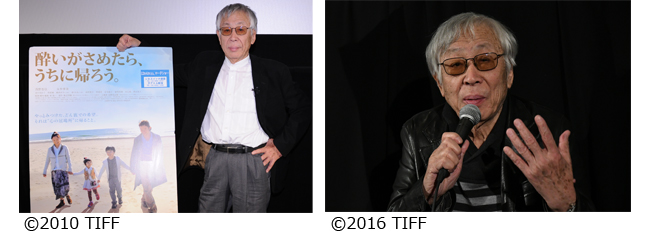
Photo: [Left] Higashi Yoichi at the Q&A session for Wandering Home, in the Japanese Eyes section at the 23rd TIFF (2010). [Right] At the Q&A session for Somebody’s Xylophone, in the Japan Now section at the 29th TIFF (2016).
Film director
Born in Wakayama in 1934. Following his 1969 documentary Okinawa Islands, he made his feature film debut with Those Quiet Japanese in 1971. In 1978, he directed Third, a landmark work for the Art Theatre Guild (ATG) that earned him numerous awards, including the Agency of Cultural Affairs’ Art Encouragement Prize for New Artists, the Hochi Film Award for Best Film and the Kinema Junpo Award for Best Director. His 1996 film Village of Dreams won the Silver Bear at the 46th Berlin International Film Festival, while his 2003 film My Grandpa received the Best Film from Asia award at the 27th Montreal World Film Festival. In 2020, a documentary titled Where Am I Now? Film Director Higashi Yoichi, which explored his upbringing and provided commentary on his works, was directed by Kodama Kenichi.
Higashi’s films have been a recurring presence at TIFF over the decades. These include The River with No Bridge in the Nippon Cinema Now section at the 5th TIFF (1992), Wandering Home in the Japanese Eyes section at the 23rd TIFF (2010), and Somebody’s Xylophone in the Japan Now section at the 29th TIFF (2016).
January 6, 2026
Tarr Béla (1955-2026)
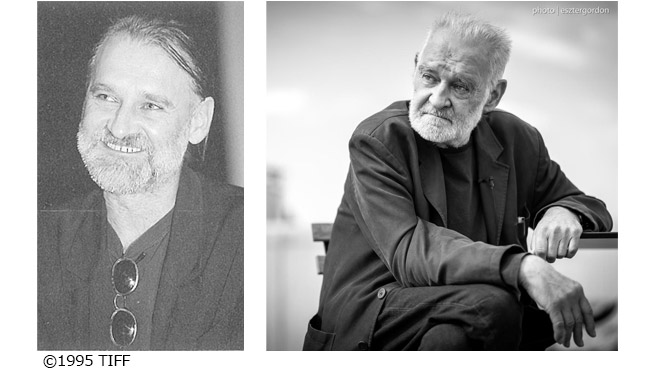
Photo: [Left] At the 8th TIFF
Film director, Screenwriter, Producer
Born in Hungary in 1955, Tarr Béla made his feature directorial debut with Family Nest (1977). The film received significant acclaim, winning the Grand Prix at the Mannheim-Heidelberg International Film Festival. In 1994, he received the Caligari Film Award for his 438-minute masterpiece Sátántangó at the Berlin International Film Festival, after which it was given a special screening at the 8th Tokyo International Film Festival. His subsequent works include Werckmeister Harmonies (2000) and film adaptation of Georges Simenon’s novel The Man from London (2007). He also won the Silver Bear (Jury Grand Prix) and the FIPRESCI Prize at the Berlin International Film Festival in 2011 for his final feature film, The Turin Horse.
Since 1990, Tarr has served as a guest professor at the Deutsche Film- und Fernsehakademie Berlin, and in 2012, he founded a film school film.factory in Sarajevo. After its closure in 2016, he remained dedicated to nurturing the next generation of filmmakers through workshops and masterclasses worldwide. In 2023, he was honored with the European Film Academy Honorary Award.
At the 37th TIFF in 2024, he was honored with the Lifetime Achievement Award. The festival also held a screening of a behind-the-scenes documentary about the filmmaking workshop he led in Fukushima Prefecture in Japan, FUKUSHIMA with BÉLA TARR, directed by Oda Kaori.
→ 37th TIFF Announces Tarr Béla As Lifetime Achievement Award Recipient
→ Tarr Béla×Yamada Yoji Special Talk – Tarr Béla 37th TIFF Lifetime Achievement Award Ceremony
→ The Fukushima Hamadori Film, Art and Culture Project × Tokyo International Film Festival 2024 – Screening of Films Made in Workshop
January 5, 2026
Ahn Sung-ki (1952-2026)
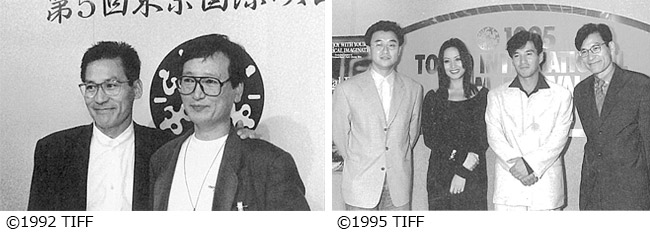
Photos: [Left] Ahn Sung-ki (left) and director Chung Ji-Young (right) at the screening of White Badge at the 5th TIFF (1992). [Right] From left: Director Park Chong-won, Kim Hye-soo, Cho Joe-Hyun, Ahn Sung-ki at the screening of Eternal Empire at the 8th TIFF (1995).
Actor.
Born in 1952, Ahn entered the film industry as a child actor, making his debut in The Twilight Train (1957), directed by Kim Ki-young. By the early 2020s, he had appeared in more than 140 films and was a revered figure in Korean cinema. In 1996, he starred in Sleeping Man, directed by Oguri Kohei.
He attended the Tokyo International Film Festival as the leading actor on the following occasions: White Badge, which won the Tokyo Grand Prix in the International Competition section at the 5th TIFF (1992); Eternal Empire, selected for the International Competition at the 8th TIFF (1995); and Spring in My Hometown, which won the Tokyo Gold – The Governor of Tokyo Award in the Competition section at the 11th TIFF (1998).
In addition, among other films featuring Ahn Sung-ki, Two Cops was screened in the Best of Asian Films section at the 7th TIFF (1994), and Sector 7 was invited for the Special Screenings section at the 24th TIFF (2011).
December 8, 2025
Harada Masato (1949-2025)
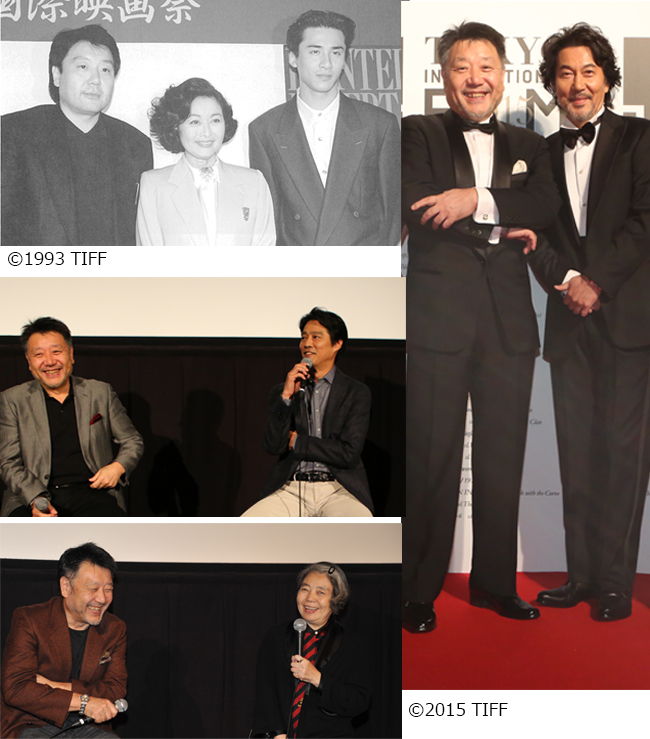
Photos: [Top left] Director Harada Masato (left) at the press conference for Painted Desert, which was selected for the competition at the 6th TIFF (1993), with actors Nobu McCarthy (middle) and Kimura Kazuya. [Right] The director on the opening red carpet for the Director in Focus: Masato Harada in the Japan Now Section at the 28th TIFF (2015) with actor Yakusho Koji (right). [Middle left] With actor Tsutsumi Shinichi at the screening of Climber’s High. [Bottom left] With actor Kiki Kirin for the screening of Chronicle of My Mother.
Film critic, film director and screenwriter.
Harada Masato was born in Shizuoka in 1949. He started his career as a film critic during the 1970s before making his directorial debut with Goodbye Flickmania (1979). Harada’s expansive filmography encompasses a wide range of genres, including Gunhed (1989), Bounce Ko Gals (1997), Jubaku: Spellbound (1999), The Choice of Hercules (2002), Sekigahara (2017), Baragaki: Unbroken Samurai (2021) and Hell Dogs (2022). He also appeared as an actor in the 2003 film The Last Samurai.
In 1993, his film Painted Desert—a theatrical adaptation of the original video series TUFF— was selected in the Competition section of the 6th TIFF. Later, at the 28th TIFF in 2015, he was featured in the Japan Now section’s Director in Focus: Masato Harada, which showcased five of his key films: KAMIKAZE TAXI (1995), Climber’s High (2008), Chronicle of My Mother (2011), KAKEKOMI (2015), and The Emperor in August (2015).
December 5, 2025
Cary-Hiroyuki Tagawa (1950-2025)
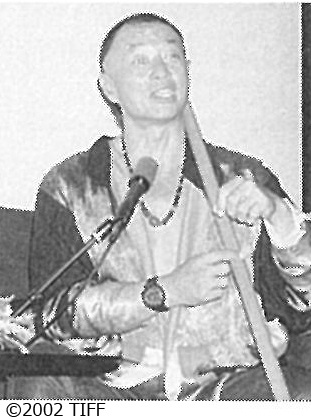
Cary-Hiroyuki Tagawa at the 15th TIFF (2002), Nippon Cinema Forum (NCF) Yoichi Komatsuzawa Talk Show “Passion for cinema! Challenges to the world!”
Actor.
Born in Tokyo on September 7, 1950. Tagawa moved to the United States when he was five years old. He began appearing in films in the 1980s in minor roles and soon stood out for his performances as villains in action movies. He has appeared in numerous Hollywood productions and TV series, including The Last Emperor (1987), American Me (1992, 5th TIFF International Competition section), Snow Falling on Cedars (1999), Pearl Harbor (2001), Planet of the Apes (2001), and Memoirs of a Geisha (2005).
During the 15th TIFF in 2002, he appeared as a guest speaker at the Nippon Cinema Forum, where he spoke passionately about his path to becoming an actor.
November 12, 2025
Sugawara Hiroshi (1955-2025)
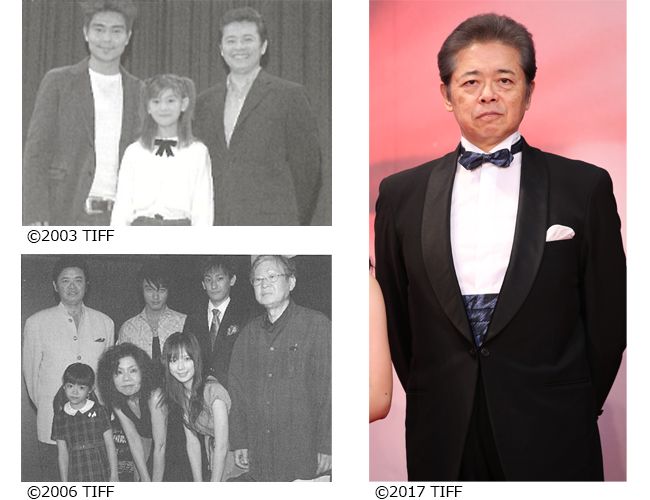
Photos: [Top left] Director Sugawara Hiroshi (right) at the 16th TIFF (2003) for Fireflies River of Light, with actors Ozawa Yukiyoshi (left) and Sugaya Risako (middle).
[Bottom left] Sugawara (back row, left) at the 19th TIFF (2006), for Forget-Me-Not. Back row: Tokuyama Hidenori (center, actor), Yoshimura Ryuta (right, music). Front row (from left): Kasa Natsuki (actor), Koyanagi Yukimi (actor), Kato Mio (actor), Soda Osamu (original author).
[Right] At the 30th TIFF (2017), Shashin Koshien Summer in 0.5 Seconds
[Bottom left] Sugawara (back row, left) at the 19th TIFF (2006), for Forget-Me-Not. Back row: Tokuyama Hidenori (center, actor), Yoshimura Ryuta (right, music). Front row (from left): Kasa Natsuki (actor), Koyanagi Yukimi (actor), Kato Mio (actor), Soda Osamu (original author).
[Right] At the 30th TIFF (2017), Shashin Koshien Summer in 0.5 Seconds
Film director, screenwriter and producer.
Born in Hokkaido in 1955, Sugawara studied film production and directing at the University of California, Los Angeles (UCLA). He made his directorial debut with Seven Days War in 1988. His film Fireflies: River of Light was selected for the Competition section at the 16th TIFF in 2003, and Forget-Me-Not was presented in the Japanese Eyes section at the 19th TIFF in 2006. At the 30th TIFF in 2017, his film Shashin Koshien: Summer in 0.5 Seconds had its world premiere in the Special Screenings section, and he appeared on the Opening Red Carpet held on October 25.
November 8, 2025
Nakadai Tatsuya (1932-2025)
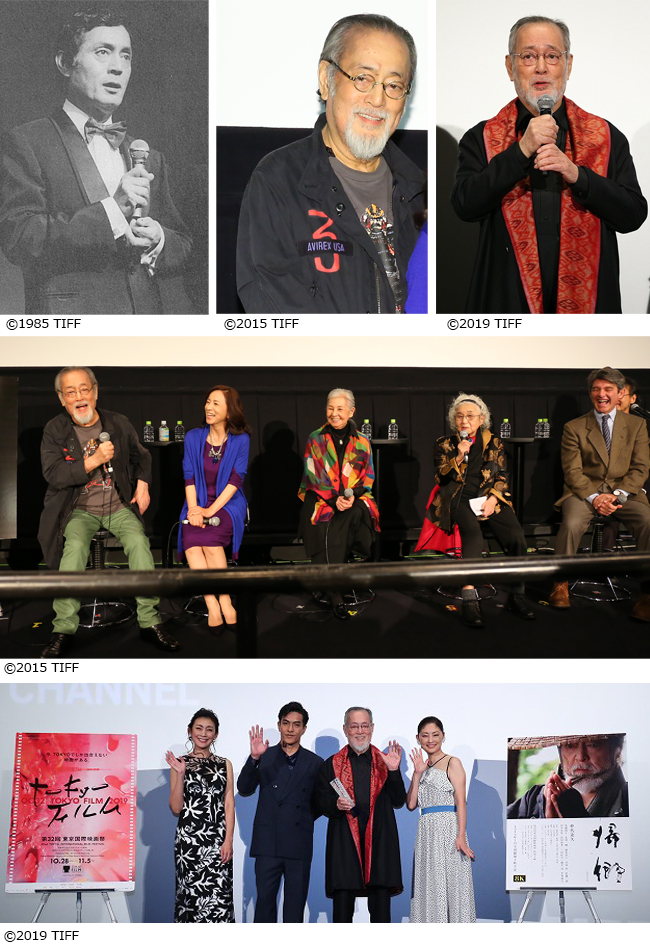
Photos: [Top left] Nakadai Tatsuya at the 1st TIFF (1985) Opening Film Ran Screening, [Top middle] At the talk session of RAN [4K Digitally Restored Version] at the 28th TIFF (2015), [Top right] Received a Lifetime Achievement Award at the screening of The Return at the 32nd TIFF (2019), [Middle] At the talk session of RAN [4K Digitally Restored Version] with Harada Mieko, Wada Mie, Nogami Teruyo and Vittorio Dalle Ore, [Bottom] At the screening of The Return with Tanaka Misato, Kitamura Kazuki and Tokiwa Takako
Actor.
Born in Tokyo in 1932. In 1952, Nakadai entered the Haiyuza Training School and subsequently appeared in numerous films and television series.
He played villainous roles in Kurosawa Akira’s Yojimbo and Sanjuro, and appeared in Ran, Kagemusha, and High and Low, earning international acclaim.
His extensive body of work also includes collaborations with many of Japan’s most distinguished directors, such as Naruse Mikio, Okamoto Kihachi, Ichikawa Kon, and Gosha Hideo. On television, he starred in NHK’s historical drama series, and on stage, he took leading roles in various productions, including those of Shakespeare’s plays.
Together with his wife, Miyazaki Yasuko, he founded the Mumeijuku (Nameless Actors Studio), where he devoted himself to nurturing the next generation of actors, including Yakusho Koji and Masuoka Toru.
At the Tokyo International Film Festival, he appeared as a guest at the inaugural edition in 1985 for the opening film Ran, where he read a letter on behalf of Director Kurosawa Akira. He also attended the 28th TIFF in 2015 for the screening of RAN [4K Digitally Restored Version], and in 2019, at the 32nd TIFF, he was presented with the Lifetime Achievement Award.
January 4, 2025
Emilio Echevarría (1944-2025)
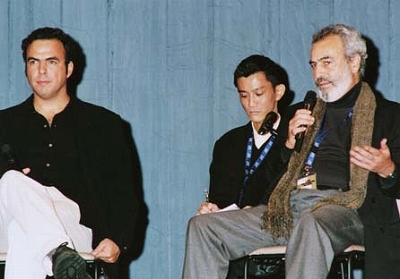
©2016 TIFF
(Photo) Alejandro González Iñárritu (left) and Emilio Echevarría (right) at the screening of Amores Perros during the 13th TIFF Competition section in 2000, where the film won the Tokyo Grand Prix and Best Director Award.
(Photo) Alejandro González Iñárritu (left) and Emilio Echevarría (right) at the screening of Amores Perros during the 13th TIFF Competition section in 2000, where the film won the Tokyo Grand Prix and Best Director Award.
Actor.
Echevarría began his career in theater during the 1970s before becoming a prominent figure in Mexican cinema. He appeared in notable films such as Amores Perros (2000), Y Tu Mamá También (2001), and Die Another Day (2002).
December 6, 2024
Nakayma Miho (1970-2024)
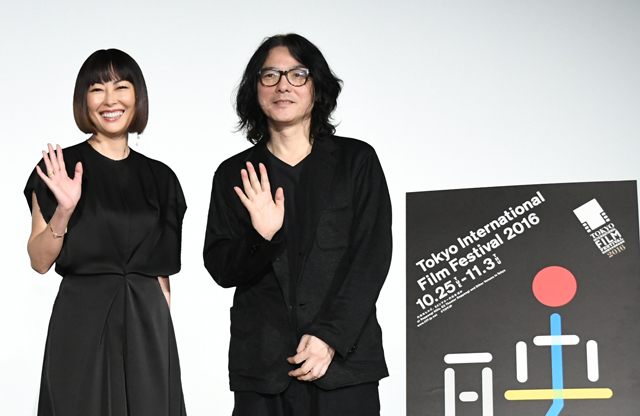
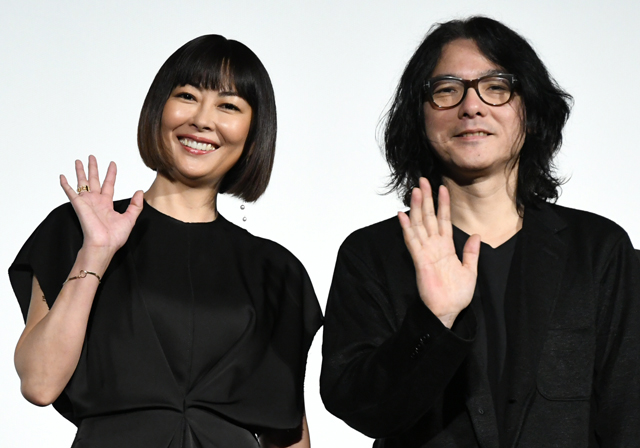
©2016 TIFF
(Photo) Actor Nakayama Miho and Director Iwai Shunji participating in a talk show following the screening of Love Letter, Director in Focus: Iwai Shunji in Japan Now Section at the 29th TIFF on October 28, 2016.
(Photo) Actor Nakayama Miho and Director Iwai Shunji participating in a talk show following the screening of Love Letter, Director in Focus: Iwai Shunji in Japan Now Section at the 29th TIFF on October 28, 2016.
Actor and singer.
Born on March 1, 1970, Nakayama made her debut in 1985. She gained immense popularity as an actor, singer, and idol, appearing in numerous TV dramas and releasing multiple hit songs. She also starred in many films, including Nami No Kazu Dake Dakishimete (1991), which won her the Popularity Award at the 15th Japan Academy Film Prize, and Tokyo Fair Weather (1997), for which she was nominated for the Best Actress Award at the 21st Japan Academy Film Prize.
In 1995, she starred in Iwai Shunji’s film Love Letter, playing dual roles as the leading role. Her performance earned her numerous acting awards. The film gained popularity across Asia and remains a globally celebrated work to this day.
October 17, 2024
Nishida Toshiyuki (1947-2024)
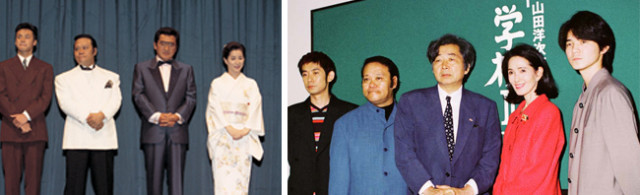
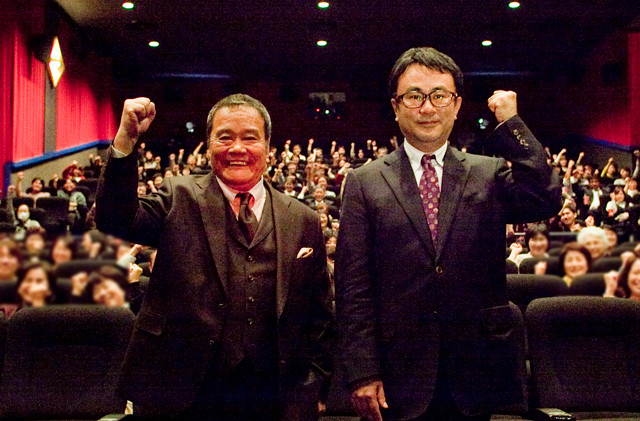
©1992 TIFF ©1996 TIFF ©2011 TIFF
[Upper left photo] (From left) Higashiyama Noriyuki, Nishida Toshiyuki, Matsukata Hiroki, Yoshinaga Sayuri at screening of opening film Heavenly Sin at the 5th (1992) TIFF.
[Upper right photo] (From left) Nagase Masatoshi, Nishida Toshiyuki, Director Yamada Yoji, Ishida Ayumi, Yoshioka Hidetaka at the Special Screening of A Class to Remember II at the 9th (1996) TIFF.
[Bottom center photo] Nishida Toshiyuki and Mitani Koki at the TIFF in Sendai in 2011.
[Upper left photo] (From left) Higashiyama Noriyuki, Nishida Toshiyuki, Matsukata Hiroki, Yoshinaga Sayuri at screening of opening film Heavenly Sin at the 5th (1992) TIFF.
[Upper right photo] (From left) Nagase Masatoshi, Nishida Toshiyuki, Director Yamada Yoji, Ishida Ayumi, Yoshioka Hidetaka at the Special Screening of A Class to Remember II at the 9th (1996) TIFF.
[Bottom center photo] Nishida Toshiyuki and Mitani Koki at the TIFF in Sendai in 2011.
Actor.
Born in 1947 in Koriyama, Fukushima. Nishida joined the Tokyo theater company Seinen-za in 1970. Since then, he has appeared in numerous films and TV series. He was also well known for his work as a singer, having had a hit song “Moshimo Piano ga Hiketa Nara” (If I could play the piano).
At the Japan Academy Film Prize, Nishida was nominated for the Best Actor award for Lost in the Wilderness and Free and Easy 14, and won the Best Actor award for The Silk Road and A Class to Remember.
He also appeared on stage for the opening film Heavenly Sin at the 5th TIFF in 1992, and for A Class to Remember II at the 9th TIFF in 1996. In 2011, he attended the 24th TIFF, where he participated in “TIFF in Sendai,” an outreach project in earthquake-affected Sendai, and attended the stage greeting for A Ghost of a Chance.
One of his last films, Doctor-X the Movie, was screened in the Women’s Empowerment section at the 37th TIFF.
August 20, 2024
Tanaka Atsuko (1962-2024)
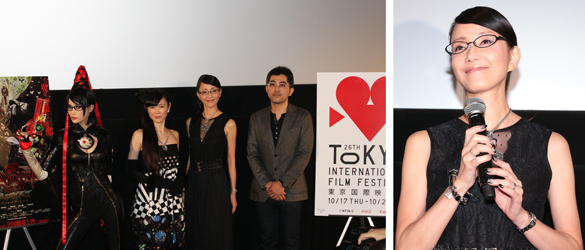
©2013 TIFF
Tanaka Atsuko at the stage greeting of the 26th TIFF Special Screening BAYONETTA Bloody Fate. [From left] Hashimoto Maho (in BAYONETTA cosplay), Sonozaki Mie, Tanaka Atsuko, Director Kizaki Fuminori.
Tanaka Atsuko at the stage greeting of the 26th TIFF Special Screening BAYONETTA Bloody Fate. [From left] Hashimoto Maho (in BAYONETTA cosplay), Sonozaki Mie, Tanaka Atsuko, Director Kizaki Fuminori.
Voice actor.
Tanaka has voiced numerous anime characters, including Kusanagi Motoko in the “Ghost in the Shell” series and Lisa Lisa in “JoJo’s Bizarre Adventure”, and has dubbed the voices of Charlize Theron, Nicole Kidman and Julia Roberts in a number of western films. She also had a long career in foreign TV series, dubbing the voice of Lily Rush, played by Kathryn Morris in “Cold Case: The Labyrinth Case Files”, and Phoebe Buffay, played by Lisa Kudrow in “Friends”. In 2013, she took the stage at the 26th TIFF Special Screening of BAYONETTA Bloody Fate.
August 11, 2024
Yano Kazuyuki
First representative of the Tokyo office of the Yamagata International Documentary Film Festival (YIDFF) and representative of Cinematrix Co., LTD.
In 1989, Yano helped launch YIDFF and devoted himself to building the festival’s foundation. He was also a representative of a film distribution company, Cinematrix, and was a member of the jury for the Asian Film Award at the 11th Tokyo International Film Festival in 1998.
May 16, 2024
Nakao Akira (1942-2024)
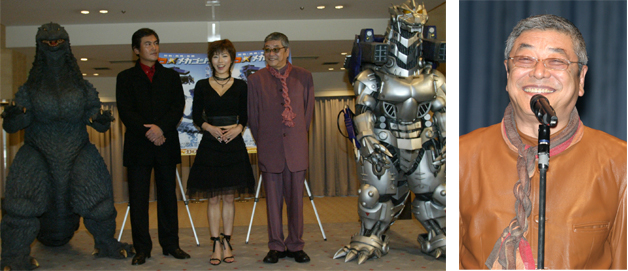
©2002 TIFF ©2003 TIFF
Actor.
Born in Chiba prefecture in 1942.
Nakao was discovered in the 5th Nikkatsu New Face talent competition in 1962. He was starred in a number of films such as Only on Mondays (1964), Death at an Old Mansion (1975), Ninja Wars (1982), Minbo: the Gentle Art of Japanese Extortion (1991), Outrage Beyond (2012) and Fly me to the Saitama (2018). He has also appeared in numerous TV series and entertainment shows.
Other film appearances include six Godzilla movies starting with Godzilla vs. Mechagodzilla II in 1993. He was on stage for two special screenings, Godzilla Against MechaGodzilla at the 15th TIFF in 2002, and Godzilla: Tokyo S.O.S. at the 16th TIFF in 2003.
May 9, 2024
Roger Corman (1926-2024)
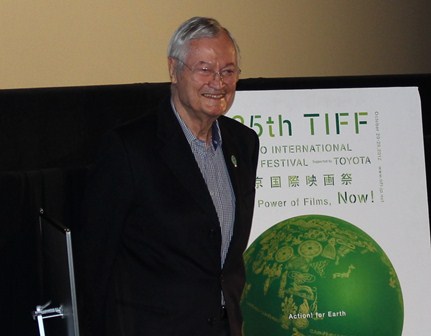
©2012 TIFF
Roger Corman at the 25th TIFF in 2012. He appeared on stage for the special midnight screening for the president of the jury : Corman’s Way.
Roger Corman at the 25th TIFF in 2012. He appeared on stage for the special midnight screening for the president of the jury : Corman’s Way.
Film producer and director.
Born in Detroit in 1926. Corman made a number of low-budget films and was known as the ‘King of B-movies.’
He was President of the Young Cinema Competition Jury at the 7th TIFF in 1994 and President of the Competition Jury at the 25th TIFF in 2012.
In 2012, TIFF held a special midnight event, Corman’s Way, to celebrate his remarkable achievements, including screenings of his film The Red Baron, and Corman took the stage after completing his duties as jury president.
April 30, 2024
Paul Auster (1947-2024)
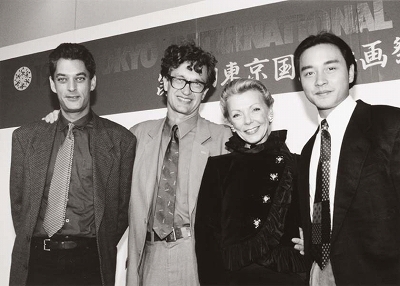
©1993 TIFF
Jury members of the Young Cinema Competition at the 6th Tokyo International Film Festival in 1993. From left; Paul Auster, Wim Wenders (filmmaker, jury president), Claudie Ossard (producer), Leslie Cheung (actor)
Jury members of the Young Cinema Competition at the 6th Tokyo International Film Festival in 1993. From left; Paul Auster, Wim Wenders (filmmaker, jury president), Claudie Ossard (producer), Leslie Cheung (actor)
The author of 34 books including the acclaimed New York Trilogy.
At the 6th Tokyo International Film Festival in 1993, he served as a member of the jury for the Young Cinema Competition with jury president Wim Wenders and his fellow jurors Claudie Ossard, Suzuki Seijun, and Leslie Cheung.
In 1995, his novel Auggie Wren’s Christmas Story was adapted into the film Smoke, directed by Wayne Wang. He also wrote the screenplay. Auster and Wang co-directed the sequel, Blue in the Face.
March 14, 2024
Terada Minori (1942-2024)
©2001 TIFF
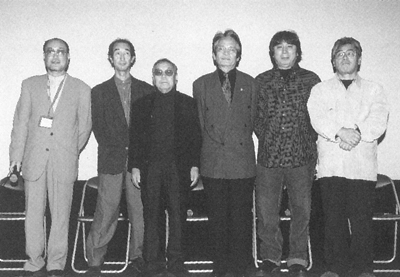
At the memorial screening of Somai Shinji, who died suddenly on September 9, 2001. From left; Maemura Kazuo (film journalist), Enokido Koji (filmmaker), Kumagai Hideo (lighting director), Terada Minori, Shinoda Noboru (cinematographer), Naganuma Mutsuo (cinematographer)
At the memorial screening of Somai Shinji, who died suddenly on September 9, 2001. From left; Maemura Kazuo (film journalist), Enokido Koji (filmmaker), Kumagai Hideo (lighting director), Terada Minori, Shinoda Noboru (cinematographer), Naganuma Mutsuo (cinematographer)
Actor. Born November 7, 1942.
Terada starred in numerous films and TV series.
At the 14th Tokyo International Film Festival in 2001, he appeared on stage at the special screening of The Catch by Somai Shinji.
January 20, 2024
Norman Jewison (1926-2024)
©2001 TIFF
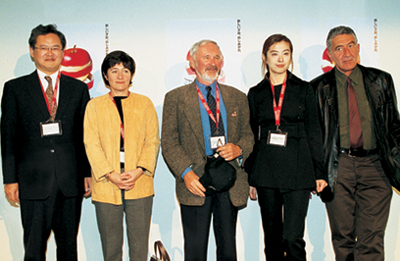
Norman Jewison (center) served as Jury President for the International Competition with fellow jurors Catherine Dussart (producer, second left), Joey Wang (actress, second right), Daniel Schmid (film director, right end) and Hamano Yasuki (researcher, left end) at the 14th Tokyo International Film Festival in 2001.
Norman Jewison (center) served as Jury President for the International Competition with fellow jurors Catherine Dussart (producer, second left), Joey Wang (actress, second right), Daniel Schmid (film director, right end) and Hamano Yasuki (researcher, left end) at the 14th Tokyo International Film Festival in 2001.
Film director. Born in Toronto, Canada. Jewison won the Academy Award for Best Picture for his 1967 film In the Heat of the Night. Throughout his career, he has directed a number of films, including Fiddler on the Roof and Moonstruck. He was Jury President for the International Competition at the 14th Tokyo International Film Festival in 2001.
January 2, 2024
Milkman Saito (1963-2024)
©2003 TIFF
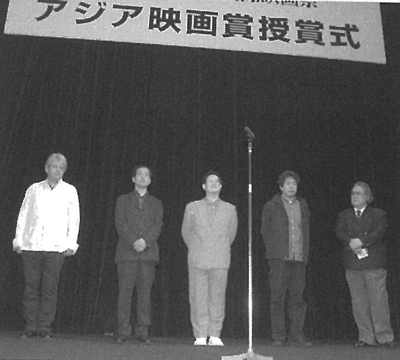
Milkman Saito (center)
Milkman Saito (center)
Film critic. Born in Kyoto in 1963.
Saito was a member of the jury for the Winds of Asia section at the 16th Tokyo International Film Festival in 2003.



















Recent News